Application Requirements in Tower Crane Slewing Systems
Tower cranes rely on frequent slewing movements to position loads accurately.
The slewing system requires continuous power supply and stable signal transmission between the rotating upper structure and the fixed lower structure.
Traditional cable connections are prone to twisting, fatigue, and damage during continuous rotation, which increases electrical failure risks and limits slewing angles.
Therefore, industrial slip rings are essential components in tower crane slewing systems.
Installation Position and Function of Slip Rings
In tower crane applications, slip rings are typically installed at the slewing center, serving as the electrical interface between the upper and lower structures.
They enable:
Continuous power transmission
Stable control signal delivery
Reliable safety and status feedback
Secure grounding connections
In practical applications, models such as LPA000-03350-03150-01N-01PE-01GND are used to meet power, control, and grounding requirements while allowing unrestricted 360-degree rotation.
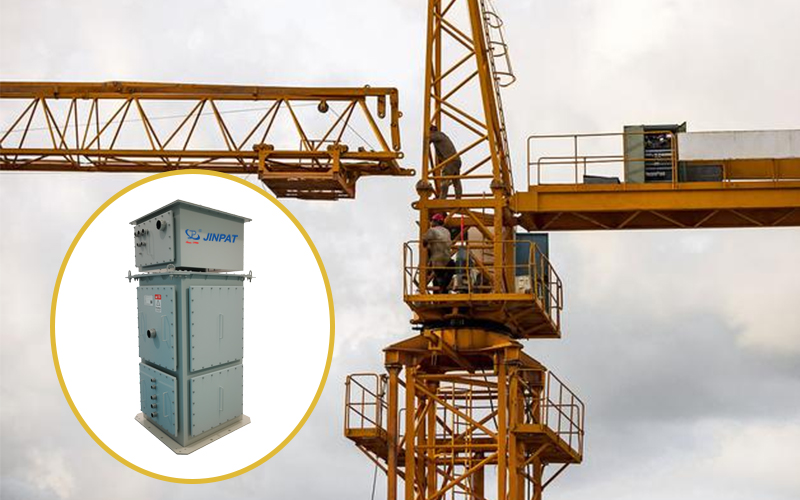
Performance Requirements for Tower Crane Slip Rings
Tower cranes operate under heavy-duty and long-term conditions, requiring slip rings to provide:
High reliability and operational stability
Multi-circuit integration for power and control signals
Proper electrical isolation to minimize interference
Reliable grounding for enhanced safety
Reduced maintenance needs
Only slip rings designed for construction machinery can meet these demanding requirements.
Role in Safety and Control Systems
Tower crane safety and control systems rely on uninterrupted signal transmission during rotation.
Industrial slip rings ensure stable electrical connections, supporting precise operation and safe working conditions.
Application Value
Using industrial slip rings in tower crane slewing systems helps to:
Eliminate cable twisting issues
Improve system reliability
Reduce electrical failures and maintenance costs
Extend overall service life
Industrial slip rings are therefore key components in modern tower crane design.