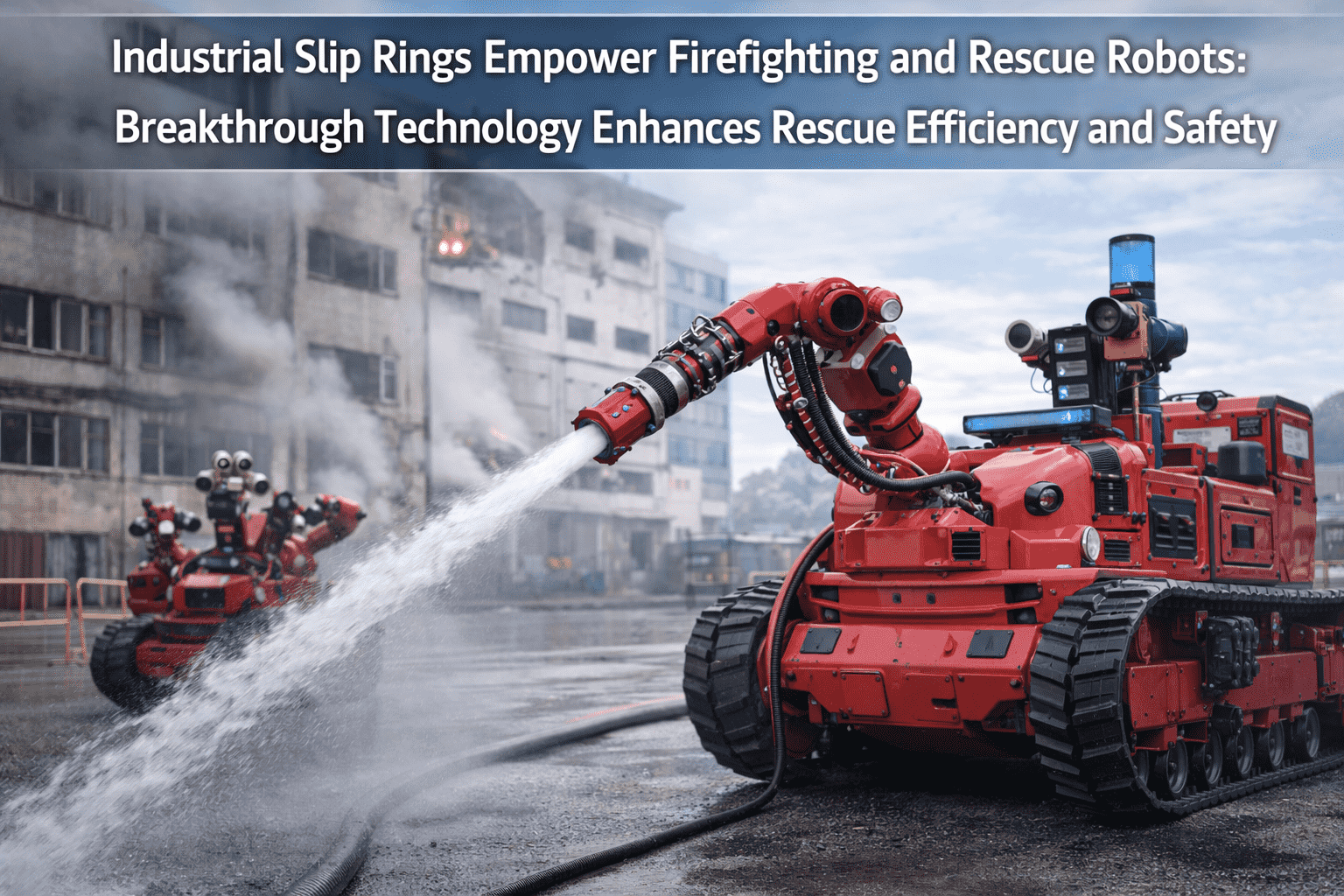
In the frontline of disaster relief, firefighting robots have become indispensable for ensuring personnel safety and improving rescue outcomes. These machines must operate flawlessly in extreme conditions, including high temperatures, dense smoke, and high humidity. At the heart of these robots, the industrial slip ring serves as a critical transmission hub, enabling the 360-degree continuous rotation required for modern firefighting missions.
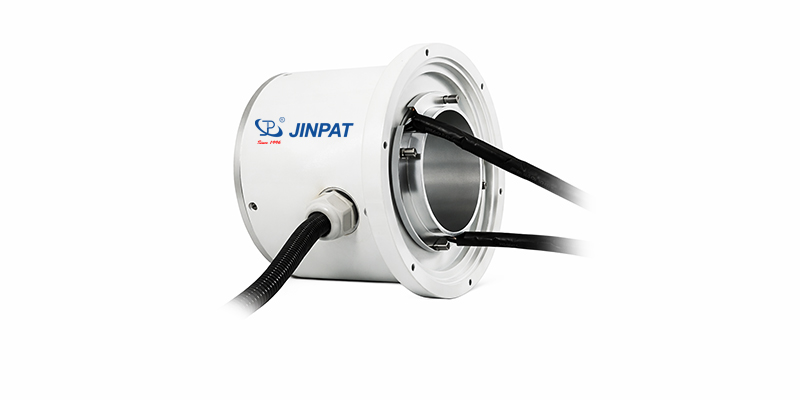
The next-generation Fireline Monitor-3 multifunctional robot exemplifies this technological leap. It integrates HD video early warning, thermal imaging, and gas detection. To achieve full-range environmental awareness, its rotating turret requires the simultaneous transmission of high-definition signals and high-pressure power. JINPAT’s specialized firefighting robot slip rings eliminate the risks of cable entanglement and breakage associated with traditional wiring, providing an unlimited "rotating lifeline."
Key Technical Breakthroughs:
Multi-Channel Integrated Transmission: Our industrial slip rings combine high-power circuits for chassis motors with high-frequency channels for HD video. This stable three-dimensional network ensures that thermal imaging and control commands are transmitted without interference.
Extreme Resilience: Designed for the heat of battle, these rotary joints are resistant to water splashes and smoke intrusion, significantly reducing the risk of failure caused by mechanical stress or moisture.
Intelligent Collaboration Support: As rescue equipment moves toward AI networking, JINPAT’s high-speed data slip rings provide the bandwidth necessary for large-scale sensor data and autonomous collaborative operations.