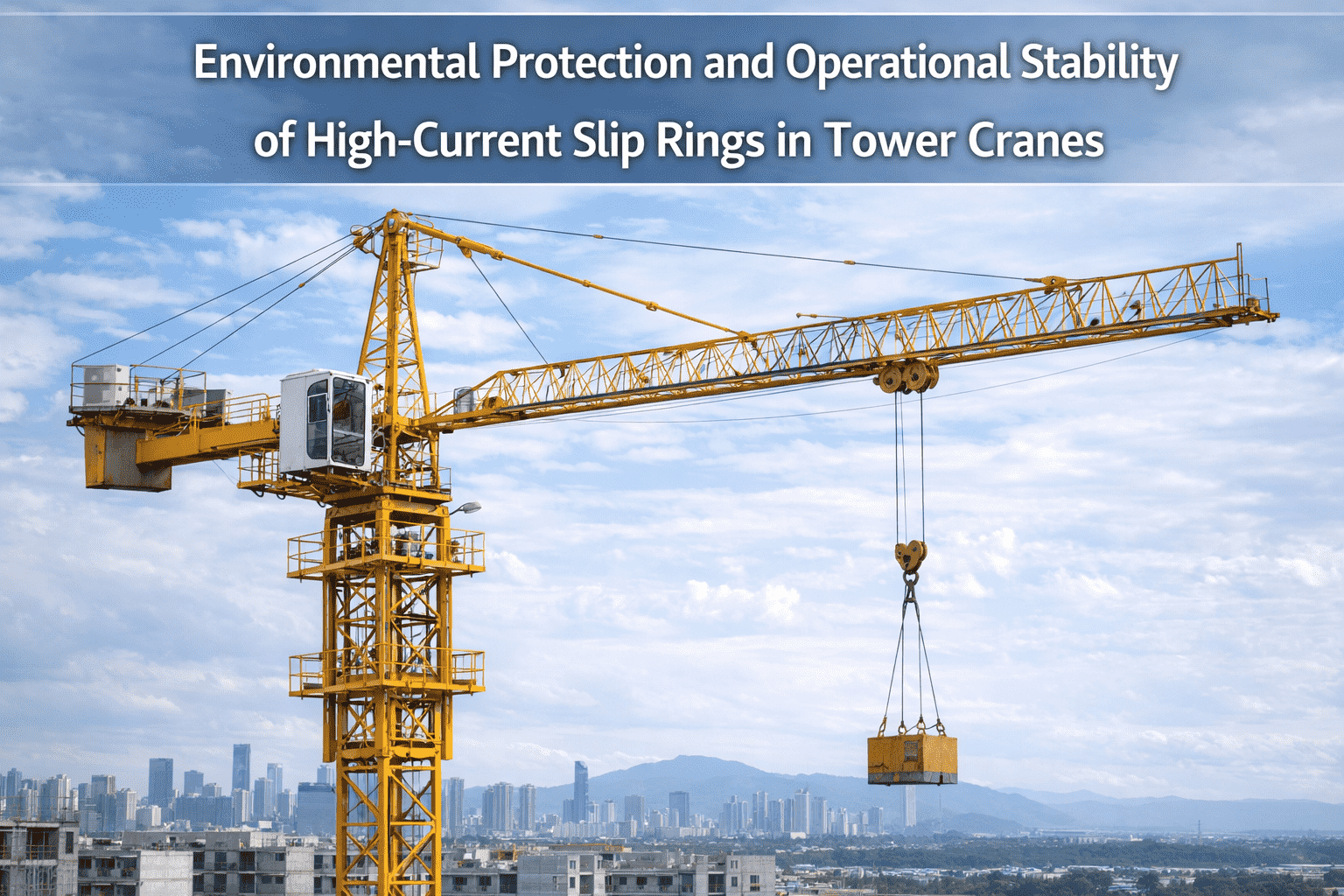
Power Transmission Requirements in Tower Crane Slewing Systems
Tower cranes operate under heavy loads and require continuous 360-degree rotation while supplying stable electrical power to hoisting and drive systems.
Typical operating conditions include:
High power demand
Frequent slewing movement
Long-term outdoor operation
Extended service life
Traditional cable connections are prone to twisting, fatigue, and failure under these conditions, which can compromise safety and reliability.
As a result, high-current industrial slip rings are essential components in tower crane slewing systems.
Role of Industrial Slip Rings in Tower Cranes
Industrial slip rings are installed at the slewing center of tower cranes, serving as the electrical interface between rotating and fixed structures.
They provide:
Continuous high-current power transmission
Stable electrical connection during rotation
Elimination of rotation angle limitations
Reduced cable wear and maintenance needs
JINPAT High-Current Slip Ring Solution for Tower Cranes
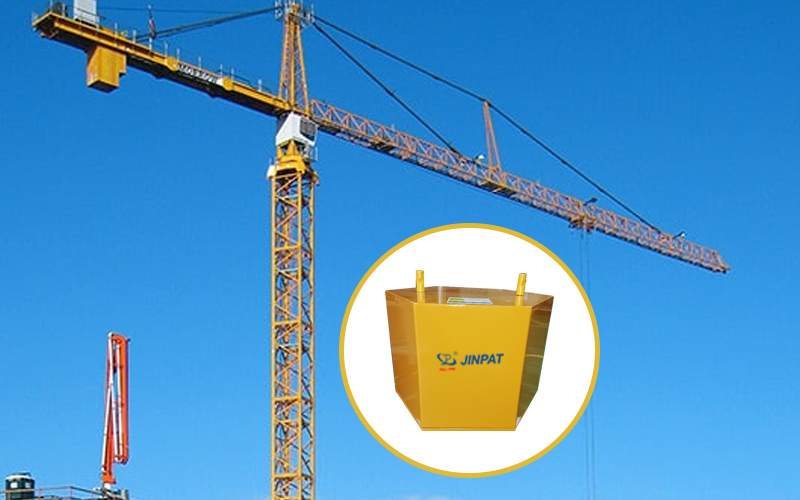
To meet the power transmission requirements of tower cranes, JINPAT offers dedicated high-current slip ring solutions for construction machinery.
In practical applications, the LPA000-03300-01N-01PE model is used in tower crane slewing systems to ensure reliable high-current power transmission during continuous rotation.
Performance Requirements for High-Current Slip Rings
Tower cranes demand slip rings that offer:
High current capacity
Structural stability under vibration
Long-term continuous operation
Low maintenance requirements
Only industrial-grade slip rings designed for heavy-duty construction equipment can meet these demands.
Application Value
By integrating high-current industrial slip rings into tower crane slewing systems, manufacturers and operators can:
Improve power transmission reliability
Reduce electrical failure risks
Extend system service life
Enhance overall operational safety
High-current industrial slip rings have therefore become a key component in modern tower crane design.